
ekuhn
Well-Known Member
Nice work Kev. I like the colors!Did not add a vent, so it is an unheated space. The only real issue would be if it becomes a heat sink, but that doesn't seem to be the case.






Nice work Kev. I like the colors!Did not add a vent, so it is an unheated space. The only real issue would be if it becomes a heat sink, but that doesn't seem to be the case.



What about foam injection or blown in?Soliciting advise...
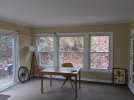
I've got this sunroom attached to my house that was probably done around 2010. All new nice double pane windows, double pain sliding doors. Zero insulation. My guess is they didn't insulate it as then it would be a "conditioned" part of the house and then there would be taxes.
Anyone see any issues with pulling off the trim and the wood paneling, throwing in Rockwool and putting paneling/trim back? I'm betting on the paneling getting pretty destroyed taking it off so betting on new paneling.
Two reasons I'd like to do this. One being that the room would then be usable during the colder months or the few weeks we run the A/C each year. Two, the french door to this room is an indoor door with no insulation or anything so we're losing heated/cooled air into that room.
I had two insulation guys come and take a look. Both said "sure, no problem, but you'll have to have someone take the walls off first" which leads me to just wanting to do the walls myself.
For the ceiling I'll either crawl in through the a side vent over the sliding doors on the outside if there's room and use rockwool, or just pay the insulation guys who said they can blow in the ceiling easily.
4th wall with the French Door and the smaller window is insulated as it's the original external wall.
View attachment 272952View attachment 272953
Both guys said it wouldn't really work in the walls, but can work in the ceiling if they have access.What about foam injection or blown in?

I think air movement is another big piece of the picture with making the space comfortable. With paneling you’re not getting sealed seams like you would with drywall. Foam insulation will fix that, or drywall it when you’re done instead of paneling.Both guys said it wouldn't really work in the walls, but can work in the ceiling if they have access.
With injection holes would need to be cut in the walls and then patched. Or take off the siding and go in that way and still patch. Since it's wood paneling, patching from the inside doesn't really work, going from the outside is a huge pita. That's why I'm just looking at removing the trim/walls and then putting the walls back with the existing trim.
Between the overlaps happening on the studs along with paint afterwards in the tight seems, it's surprising how sealed they are. If anything I could put some rubber weatherstripping or something similar on the studs that the edge of the paneling nails to.I think air movement is another big piece of the picture with making the space comfortable. With paneling you’re not getting sealed seams like you would with drywall. Foam insulation will fix that, or drywall it when you’re done instead of paneling.
Even without the air sealing I’m sure there would be big improvement.

What about the thinnest drywall? Not sure how that compares to the thickness of the paneling but maybe it could work.Between the overlaps happening on the studs along with paint afterwards in the tight seems, it's surprising how sealed they are. If anything I could put some rubber weatherstripping or something similar on the studs that the edge of the paneling nails to.
I thought about drywall for a hot minute but the window and door casing is setup right now for the thickness of wood paneling. Plus wood paneling is 10x easier to work with.
I'm looking to tear off one wall this weekend, just want to make sure there isn't any gotchas I haven't thought about.
Didn’t even consider this, messing with the casings is a PITA (been there when I installed 1/4 over 1/2 in one of the bedrooms).I thought about drywall for a hot minute but the window and door casing is setup right now for the thickness of wood paneling. Plus wood paneling is 10x easier to work with.
Not worth it, the 1/4 drywall is super flimsy and will crack easy. At least the paneling has some give to it.What about the thinnest drywall? Not sure how that compares to the thickness of the paneling but maybe it could work.
Aside from making sure you have a vapor barrier, none that I can think of.I guess I'm wondering if anyone had concerns with just using rockwool and then putting panels up?
And then my question is, vapor barrier on the inside or outside?Aside from making sure you have a vapor barrier, none that I can think of.

Probably not exactly your situation, but when we insulated our furnace room on the side of the house the building inspector recommended Tyvek (behind the outermost split log siding), rockwool, vapor barrier right behind the inside paneling which will also take care of air tighteness. Those painted wood panels can have different ideas other than being removed without damage, be prepared to replace a few, but I personally like them better than drywall ( in moderation).And then my question is, vapor barrier on the inside or outside?
This is really my biggest concern. I live in a temperate rain forest, it's VERY humid here. It rains here more than Seattle every year.
I assumed on the inside, and the outside can breath. Otherwise I'd need the barrier on the outside under the siding, which would not happen. Or no vapor barrier like every house was built up until kind of recently?
That’s what I meant, probably using the words interchangeably when I should be. Why not just use the typical paper faced batts? I’m probably missing something, but what does rockwool get you other than ease of handling and fire resistance? I don’t think the latter is needed for this circumstance.And I should mention, it seems when I looked into this I shouldn't be using a vapor barrier but retarder like kraft paper, and should be on the inside.
Well @Santapez I may be completely off base. Didn’t read the whole thing though.That’s what I meant, probably using the words interchangeably when I should be. Why not just use the typical paper faced batts? I’m probably missing something, but what does rockwool get you other than ease of handling and fire resistance? I don’t think the latter is needed for this circumstance.
You could always check local code which will give you an idea of what’s appropriate for your area.
 buildingscience.com
 The freezer has been struggling to keep up lately. I noticed this week that the bottom drawer wasn’t sealing all the way. Been there with this unit, I figured there was ice built up along the seal somewhere.
Same thing happens to my shitty Samsung. Check your drain in the back. Mine is a defect which doesn't defrost the ice in the outlet, but in others they get clogsView attachment 273472The freezer has been struggling to keep up lately. I noticed this week that the bottom drawer wasn’t sealing all the way. Been there with this unit, I figured there was ice built up along the seal somewhere.
This morning when I started looking, I realized some bread that was in the bottom of the drawer was totally soft. So, wound up tossing pretty much everything in the freezer including a bunch of meat which is really disappointing. Decided to let it defrost and see how that goes.
Turns out that the entire bottom of the freezer was a solid sheet of ice. I’m hoping it’s not from the ice maker/ water dispenser…
View attachment 273473

Mine is an LG, I should probably research the common issues on my model to figure it out. Thanks for the heads up.Same thing happens to my shitty Samsung. Check your drain in the back. Mine is a defect which doesn't defrost the ice in the outlet, but in others they get clogs